Why golf courses are exploring new revenue
Running a golf course has never been inexpensive, but the economics have become even more challenging over the past decade. According to Golf Course Superintendents Association of America (GCSAA) research, the average maintenance budget for an 18-hole U.S. golf course now exceeds $1 million annually, with labor representing roughly half of that cost. As wages, equipment, and maintenance inputs continue to rise, many facilities are looking for additional revenue sources that don’t require increasing greens fees or membership dues.
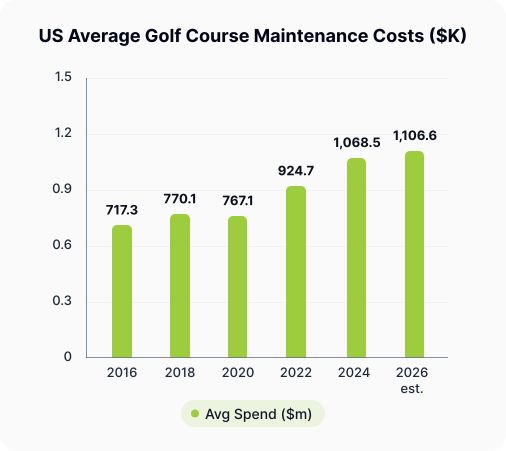
The average maintenance budget for an 18-hole U.S. facility now exceeds $1 million annually.1
Golf course operating costs continue to climb, particularly for labor and equipment. Recent GCSAA surveys place average maintenance budgets for an 18-hole facility at over $1 million annually, with wages representing roughly half of total maintenance spending. Rising costs have led many facilities to rethink how courses are maintained, from reducing irrigated acreage to converting out-of-play areas into natural landscapes that require less maintenance.
Advertising opportunities around the course
Rather than relying solely on higher greens fees or membership dues, many operators are also looking for complementary revenue sources. Advertising and sponsorships provide one opportunity because they monetize existing assets such as, tee boxes, golf carts, scorecards, driving ranges, tournaments, and clubhouse spaces, without changing the golf experience when implemented thoughtfully.
Advertising value depends on more than the amount of time a golfer spends near a placement. A tee box sign may be visible for only a few minutes at one hole, but a structured hole sponsorship program can expose golfers to the same brand repeatedly throughout the round. A clubhouse display may receive fewer total encounters, yet benefit from longer dwell time and a more relaxed, socially engaged audience.
The format of the placement also matters. A static sign can create awareness, while an interactive GPS screen, trackable QR code, promotional offer, or staffed tournament activation can encourage an immediate action. For that reason, SIIQ evaluates opportunities using a combination of dwell time, visibility, repeat exposure, audience mindset, and interaction potential rather than relying on a single measurement.
Every golf course already contains dozens of assets that businesses are willing to sponsor or advertise on. Some are obvious, such as tee signs or scorecards. Others such as, clubhouse patios, driving ranges, GPS screens, beverage carts, and tournament activations, are often overlooked despite attracting significant golfer attention. The challenge isn’t simply identifying inventory. It’s understanding which assets deliver the greatest value to both the course and potential sponsors.
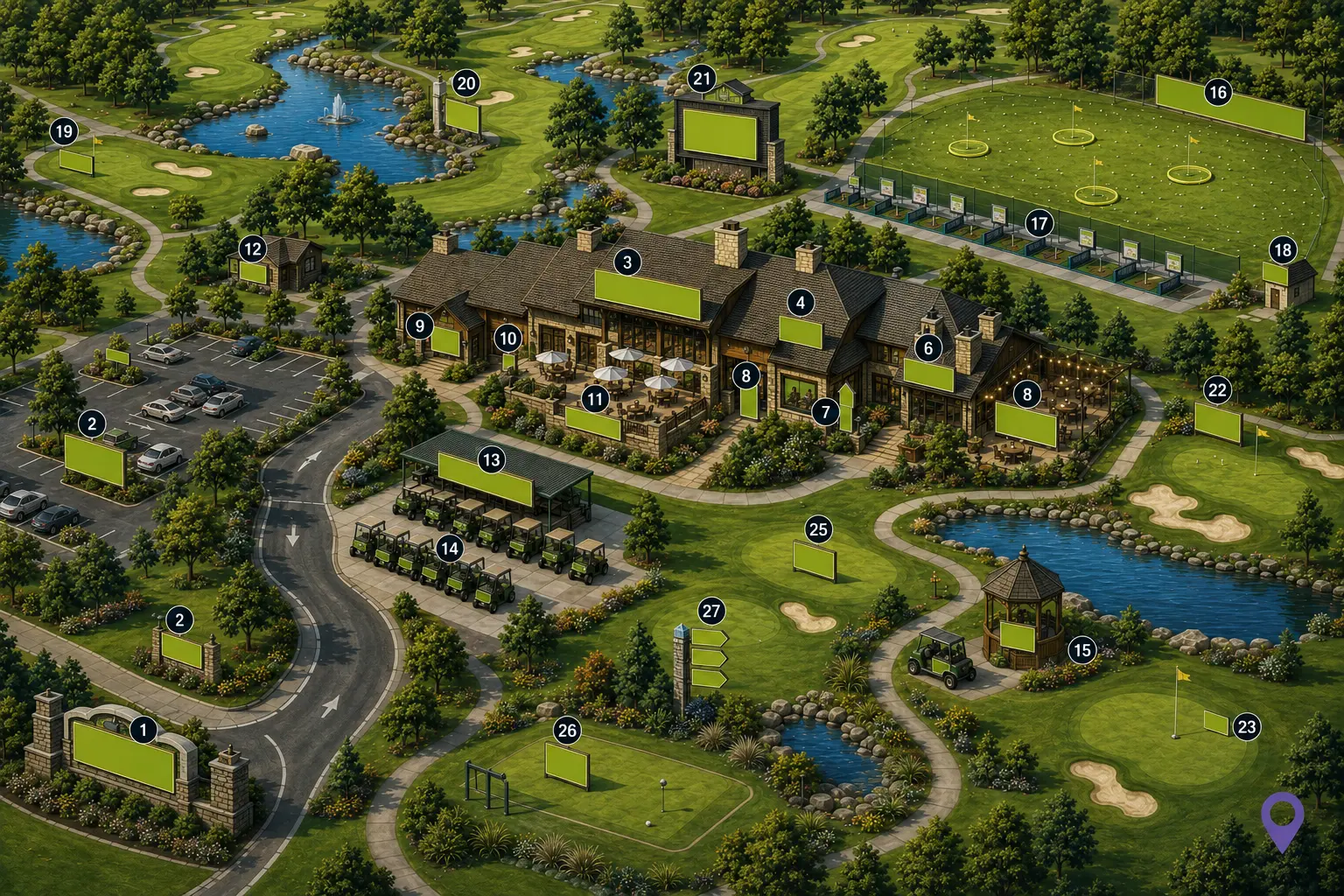
Where golfers encounter advertising
Golfers move through a predictable sequence of environments before, during, and after a round. Each location creates a different combination of dwell time, repetition, and interaction potential.
The ranges below are directional planning estimates. Actual exposure will vary by course layout, pace of play, operating model, player habits, and whether a visit includes practice, dining, or an event.
| Location | Typical visit | Repeat visits during round | Best advertising opportunities |
|---|---|---|---|
| Parking and arrival | 2–5 minutes | 1 | Entrance monument and parking signage |
| Pro shop | 5–15 minutes | 1–2 | Retail displays and digital screens |
| Clubhouse or restaurant | 30–90 minutes | 1–2 | Naming rights, menus, patio, and lobby |
| Practice green | 10–20 minutes | 1 | Instruction and equipment sponsorships |
| Driving range | 20–60 minutes | 1 | Range sponsor, targets, and fence banners |
| Golf cart | 4–5 hours | For much of the round when carts are used | GPS screens, wraps, and seat backs |
| Tee boxes | 2–4 minutes each | Up to 18 | Tee sponsors and QR activations |
| Beverage cart | 2–5 minutes | Multiple | Beverage brands and restaurants |
| Scorecard or mobile app | Entire round | Continuous | Digital sponsorship and trackable offers |
The SiiqIQ Opportunity Rating framework
Not every sponsorship opportunity provides the same kind of value. A tee box placement may receive only a few minutes of attention at one stop, but golfers can encounter similar placements repeatedly throughout a round. A clubhouse patio may produce fewer encounters, yet provide significantly longer dwell time and a more social, receptive environment.
To compare different assets more consistently, SIIQ developed a directional rating framework based on five characteristics. Each characteristic is scored from one to five and assigned a weight according to its expected contribution to an advertising opportunity.
| Rating | Meaning |
|---|---|
| 5 | Excellent |
| 4 | Strong |
| 3 | Moderate |
| 2 | Limited |
| 1 | Minimal |
Opportunity-rating results
Free planning worksheet
Audit your golf course advertising inventory
Download the editable Excel worksheet to document available assets, record production requirements, calculate directional Opportunity Ratings, track existing sponsors, and begin preparing a rate card.
How to package golf course opportunities
Individual placements can be sold separately, but well-designed packages are often easier for sponsors to understand and more valuable to the course. The strongest packages combine assets that perform different jobs: one creates broad visibility, another provides repeated exposure, and a third creates a measurable interaction.
For example, a local financial institution might receive clubhouse recognition, a recurring GPS screen placement, and category exclusivity. A restaurant could pair beverage cart branding with a scorecard offer and a post-round patio promotion. A tournament sponsor might combine registration signage, a hole activation, digital leaderboard placement, and hospitality.
Build packages around a clear objective
- Awareness: Entrance signage, course-wide branding, cart wraps, and naming rights.
- Repeated exposure: Tee signs, GPS screens, scorecards, and wayfinding placements.
- Engagement: QR offers, contests, product sampling, and staffed activations.
- Hospitality: Golf rounds, event access, dining, meeting space, and corporate outings.
- Community association: Junior programs, leagues, charitable events, and public course programs.
Each package should clearly state the term, placement locations, production responsibilities, estimated exposure, included benefits, category restrictions, reporting, and renewal process. Avoid adding unrelated inventory simply to make a package appear larger.
How to price golf course advertising and sponsorships
There is no universal rate card for golf course advertising. A reasonable price depends on the size and quality of the reachable audience, the prominence of the asset, the number of exposures, the length of the agreement, production requirements, sponsor benefits, and demand within the local market.
A useful starting point is to separate measurable media value from the broader commercial value of the partnership. Estimated impressions can help establish an audience value baseline. Placement visibility, exclusivity, course reputation, included hospitality, and promotional support then adjust that baseline to reflect the complete package.
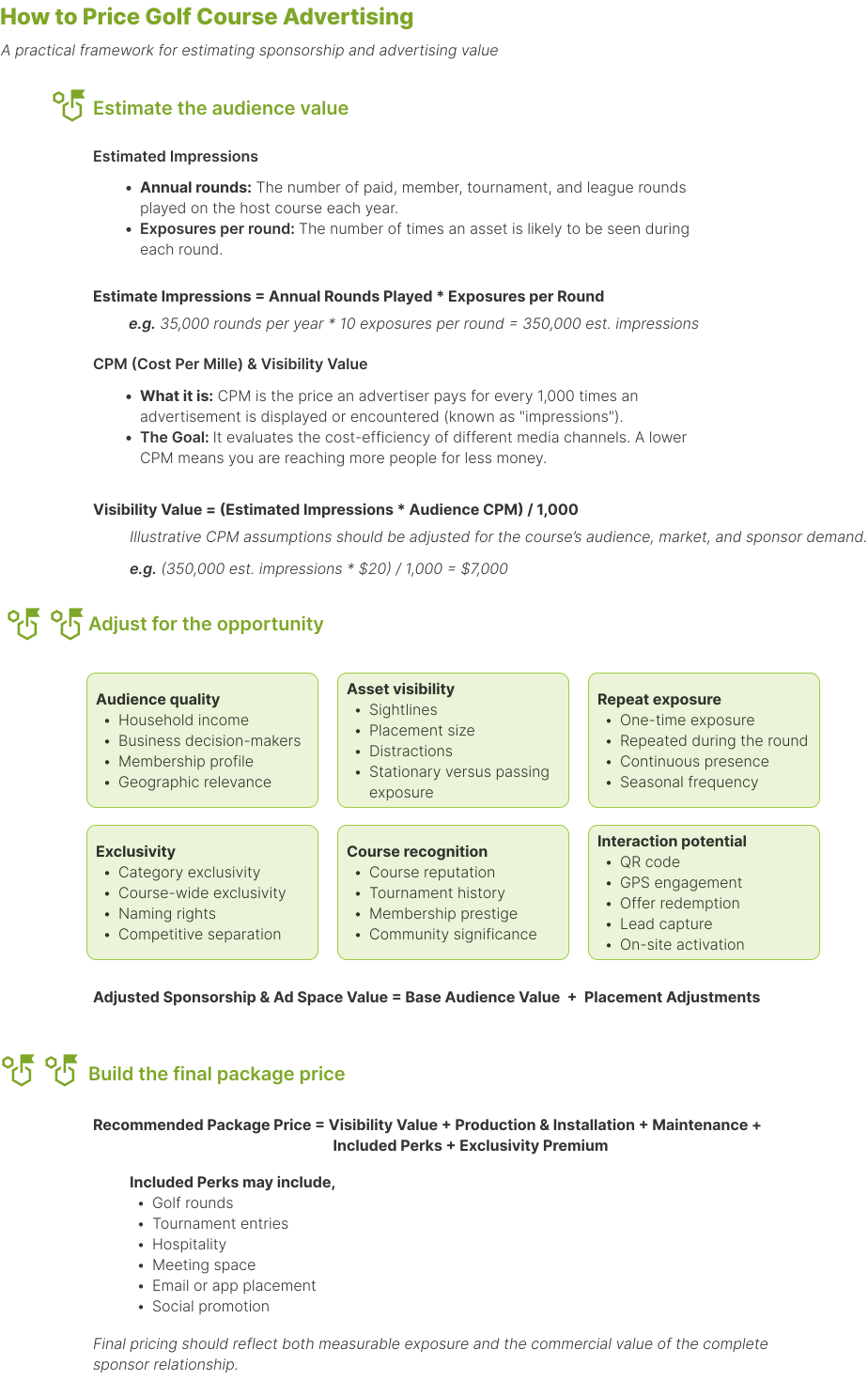
Start with estimated exposure
Estimate how many golfers are likely to encounter the asset by multiplying annual rounds by the expected number of exposures per round. For a course hosting 35,000 rounds annually, a placement encountered ten times per round would create an estimated 350,000 exposures before accounting for staff, guests, spectators, restaurant visitors, or tournament attendance.
This is an exposure estimate, not a verified impression count. Courses should document the assumptions used and avoid presenting modeled exposure as audited delivery.
Adjust for audience and placement quality
Two assets with the same modeled exposure can have very different value. A large GPS message shown during play may be more noticeable and interactive than a small sign in a visually crowded area. Likewise, a course serving a highly relevant local audience may be more valuable to a nearby business than a larger but less targeted audience elsewhere.
Add tangible costs and sponsor benefits
Production, installation, maintenance, creative changes, event staffing, golf rounds, hospitality, meeting space, email placement, social promotion, and other included benefits should be priced separately or clearly incorporated into the package. Courses should also account for the value of exclusivity, especially when agreeing not to work with competing businesses in the same category.
Finding appropriate sponsors
The best sponsor is not necessarily the largest company in the market. A strong fit usually combines audience relevance, geographic proximity, appropriate budget, and an activation that makes sense within the golf environment.
Start with businesses that already benefit from relationships with golfers, members, tournament participants, local residents, or corporate decision makers. Then match each prospect to an asset that supports a real business objective. A vehicle dealer may benefit from a tournament display or hole-in-one activation, while a nearby restaurant may gain more from a trackable scorecard offer or beverage cart partnership.
Course type also matters. Private clubs may be more relevant to wealth management, luxury automotive, enterprise services, and hospitality companies. Public and municipal facilities may offer stronger alignment for healthcare organizations, restaurants, home services, community businesses, and regional employers.
| Sponsor category | Why it may fit golf courses | Strongest course environment |
|---|---|---|
| Financial services | Affluent audiences, wealth management needs, and relationship driven business development. | Private clubs and corporate tournaments |
| Real estate | Local homeowner reach and relationship driven selling. | Public courses and private clubs |
| Automotive | High-value buyers, vehicle displays, and hole-in-one promotions. | Private clubs and tournaments |
| Healthcare | Broad local relevance, wellness alignment, and community positioning. | Public and municipal courses |
| Restaurants | Geographic proximity and offers that can be tracked through codes or scorecard promotions. | Public and daily fee courses |
| B2B services | Access to owners, executives, and organizational decision makers. | Private clubs and corporate outings |
| Home services | Local homeowners, geographic targeting, and recurring household demand. | Public, municipal, and daily fee courses |
Best practices for course operators
Protect the course experience
Advertising should feel intentional rather than added wherever space is available. Establish design standards covering placement size, materials, colors, installation, maintenance, and prohibited content. Premium physical materials and restrained creative generally fit the environment better than temporary signs or visually aggressive displays.
Give each sponsor a defined presence
A recognizable association with one asset is often more valuable than several small placements scattered across the property. Consider offering a clearly defined area, program, event, or category rather than assembling a package from unrelated remnants.
Combine physical and digital exposure
Physical placements create awareness, while digital elements can provide updates, offers, and measurable actions. A tee sign could connect to a course-specific offer, while a range sponsor might also appear in booking confirmations, tournament communications, or GPS content.
Create useful interactions
Golfers are more likely to engage when a sponsor provides something relevant: refreshments, useful equipment, instruction, a contest, hospitality, or a well-designed offer. An activation should add value without delaying play or disrupting concentration.
Define measurement before the campaign begins
Decide in advance what the course will report. Depending on the package, this may include rounds played, operating dates, tournament attendance, digital delivery, QR scans, offer redemptions, contest entries, photographs, and proof that the agreed placement remained installed.
Build a renewal process
Contact sponsors before the end of the agreement with delivery information, photographs, outcomes, and options for renewal. A repeatable renewal process can turn one-time placements into more predictable annual revenue.
Common mistakes to avoid
Selling too many disconnected placements
Excessive signage can reduce the value of every sponsor while weakening the appearance of the property. Set inventory limits and preserve unsponsored areas rather than attempting to monetize every available surface.
Using inconsistent pricing
Quoting different rates without a documented reason makes future renewals and negotiations difficult. Use a repeatable pricing framework, record any discounts, and distinguish between standard pricing and introductory pilot offers.
Failing to document deliverables
Every agreement should identify the exact location, dimensions, term, installation responsibilities, included benefits, creative deadlines, reporting, renewal terms, and removal process.
Ignoring production and maintenance costs
A sponsorship may appear profitable until printing, installation, repairs, staff time, and creative changes are included. State who pays these costs and whether they are included in the package price.
Choosing placement without considering sightlines
A large sign can still perform poorly when it is obscured, viewed from an awkward angle, passed too quickly, or surrounded by competing information. Review placements from the golfer's actual route rather than from a site plan alone.
Creating friction or slowing play
On-course interactions should be fast and optional. Long forms, forced conversations, poorly positioned representatives, or complicated contests can create frustration and affect pace of play.
Offering exposure without a follow-up path
Static awareness can be useful, but advertisers increasingly expect some way to connect exposure to action. Where appropriate, support the placement with a dedicated URL, offer code, QR destination, lead form, or follow-up communication.
Frequently asked questions
What advertising and sponsorship inventory can a golf course offer?
Potential inventory includes entrance signage, clubhouse displays, restaurant and patio placements, pro shop screens, golf cart branding, GPS advertising, driving range sponsorships, tee box signs, scorecards, beverage carts, tournaments, leagues, junior programs, wayfinding, leaderboards, and selected naming rights opportunities. The appropriate inventory depends on course ownership, contracts, aesthetics, operating policies, and applicable local rules.
How should a golf course price sponsorship opportunities?
Begin with estimated audience exposure, then adjust for placement visibility, repeat exposure, audience characteristics, interaction potential, exclusivity, course recognition, production costs, and included benefits. Use the result as a starting point and test it against actual sponsor demand rather than treating any formula as a guaranteed market price.
Can a municipal golf course sell advertising?
Municipal courses may be able to sell advertising and sponsorships, but the authority and approval process vary. Operators should review local procurement rules, naming policies, sign ordinances, existing vendor agreements, alcohol restrictions, public record requirements, and any limits on commercial speech before offering inventory.
How can a course sell sponsorships without a dedicated salesperson?
Start with a small, documented inventory list and a limited number of clearly priced packages. Publish the opportunities online, use a standard inquiry form, prepare reusable agreements, and create a scheduled renewal process. Existing vendors, tournament partners, nearby businesses, members, and local organizations can provide the first prospect pool.
How can a course preserve a premium appearance?
Establish design and placement standards before selling inventory. Limit the number of physical placements, require durable materials, prohibit visually intrusive creative, and move detailed promotional messages to GPS screens, landing pages, email, or other digital formats.
Should sponsorship agreements include category exclusivity?
Exclusivity can increase value, but it should be narrowly defined. Identify the exact business category, term, property area, and exceptions. Avoid broad restrictions that prevent the course from working with unrelated companies or existing vendors.
How long should an agreement last?
Seasonal and annual agreements are common starting points because they provide enough time to install, operate, and assess the placement. Tournaments and activations may use shorter terms. Multi-year agreements should address price increases, creative changes, maintenance, early termination, and performance interruptions.
Who normally pays for signage and installation?
Either party can pay, but the agreement should make the responsibility explicit. The course may charge a separate production fee, include standard production in the package, or require the sponsor to use an approved vendor.
What happens when weather or construction reduces exposure?
Include a "make good" provision explaining what happens when a closure, cancellation, construction project, or other interruption materially affects delivery. Alternatives may include an extended term, replacement placement, additional digital exposure, or another mutually agreed benefit.
Turn existing golf course assets into structured opportunities
Golf courses do not need to transform themselves into heavily commercialized environments to generate meaningful advertising or sponsorship revenue. Most facilities already contain valuable physical, digital, event, and program-based assets. The opportunity is to identify them deliberately, protect the golfer experience, compare their relative value, and present them to businesses in a clear and professional format.
Start with a limited inventory audit rather than attempting to sell every possible placement. Document where golfers spend time, identify the assets with the strongest visibility and interaction potential, create several well-defined packages, and test pricing with appropriate local or regional sponsors. The resulting feedback can help refine both the inventory and the pricing model over time.
Have golf course advertising opportunities to offer?
SIIQ helps organizations make real world advertising spaces and sponsorship opportunities easier for businesses to discover.
Sources and methodology
External research
Factual claims concerning golf course operating costs, maintenance budgets, labor expenses, participation, audience characteristics, and other industry statistics should be linked to the original publisher whenever available. Sources should be reviewed at publication and again whenever this guide is materially updated.
- Golf Course Superintendents Association of America. Title of the 2024 maintenance report . Published 2024. Accessed July 2026. ↩
- United States Golf Association. Relevant course maintenance or pace of play resource . Accessed July 2026.
- Additional original source used for any published audience or participation claim.
SIIQ-created analysis
The golf course opportunity map, inventory classifications, packaging framework, pricing framework, sponsor fit guidance, and SiiqIQ Opportunity Rating were developed by SIIQ for educational and planning purposes.
Opportunity ratings are directional assessments of placement characteristics. They are not derived from observed campaign results and do not guarantee audience delivery, engagement, sponsor interest, pricing, or financial performance.
Exposure and time estimates are illustrative unless a specific external source or course level measurement is cited. Pricing examples are planning assumptions rather than marketwide benchmarks.
Courses should replace generalized assumptions with their own rounds, attendance, operating hours, placement observations, production costs, local audience data, sponsor demand, and contractual requirements.
Last reviewed: July 2026
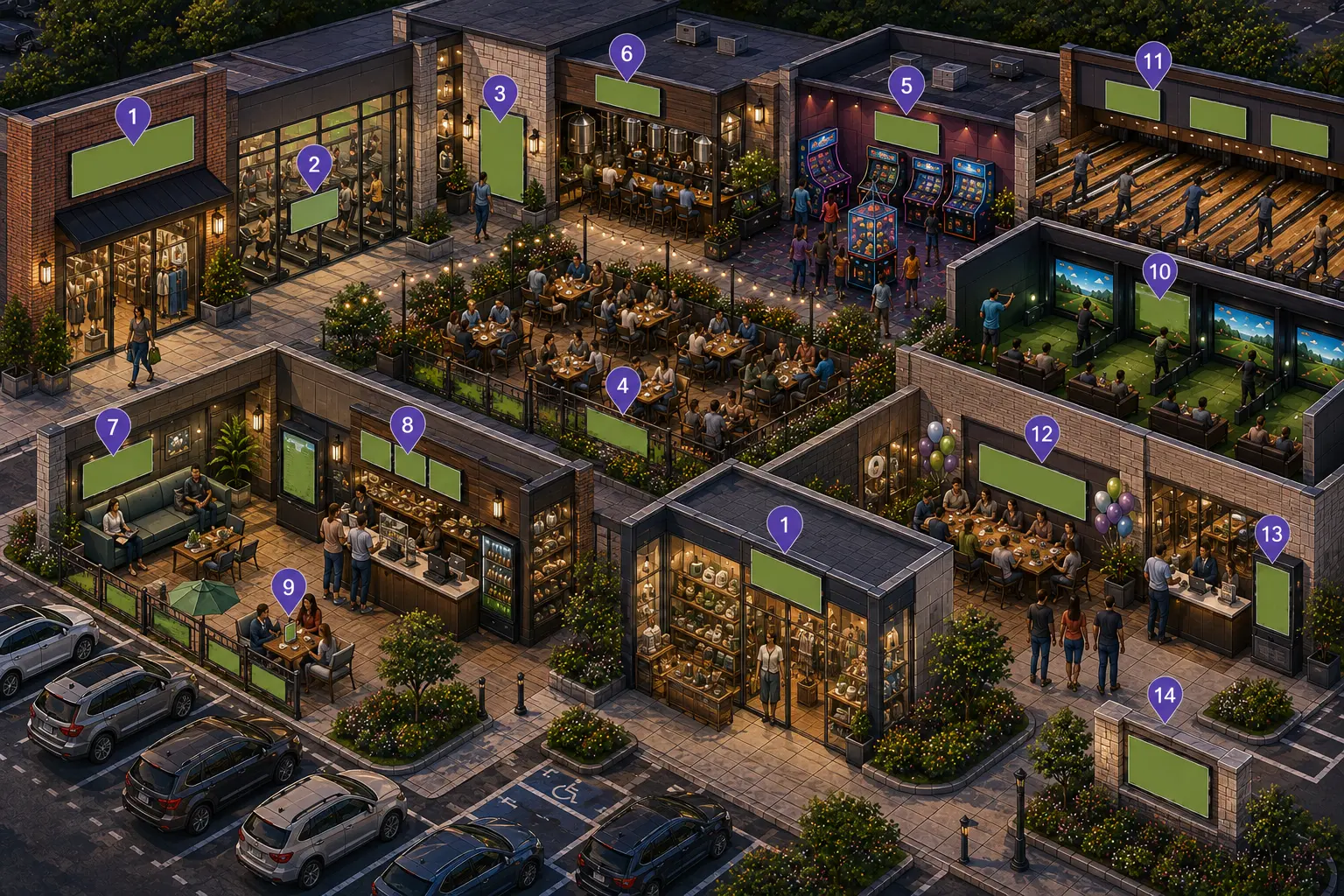
The Local Business Advertising Revenue Field Guide
Inventory assets, build sponsorship packages, calculate opportunity ratings, track advertisers, and develop pricing worksheets.
Read guide
How Municipalities, Business Districts, and Tourism Organizations Can Build Sustainable Sponsorship Programs and Generate Revenue
Learn how municipalities, business improvement districts, tourism organizations, parks departments, and economic development agencies can inventory, evaluate, package, price, and manage sponsorship opportunities while building sustainable community partnerships.
Read guide